Why a Reliable Air Compressor Is the Heart of Your XCMG Loader’s Safety System
Fleet managers spend a lot of time thinking about engines, transmissions, and hydraulics. The air compressor? It barely registers on the maintenance radar. Yet when an air compressor fails on an XCMG ZL50G or LW500 wheel loader, the machine does not limp to the shop — it stops. Immediately. Because without compressed air, the loader’s braking system cannot function.
XCMG wheel loaders use an air-over-hydraulic braking system, meaning compressed air provides the power assist that makes the hydraulic brakes work. The air compressor is driven directly by the engine. It builds and maintains the air pressure required to operate the brakes and air-powered accessories — pumping compressed air into a reservoir where it stays until needed. When the operator presses the brake pedal, that stored air pressure translates into the hydraulic force that stops a machine weighing upwards of 17 tons. If the compressor cannot build or hold pressure, the entire braking circuit goes dark.
Put simply: the air compressor is a safety component first and everything else second.
The Air Compressor That Fits Your Machine
For operators and fleet managers running the XCMG ZL50G or LW500 series, PartsByU stocks a direct-fit replacement — the Air Compressor 860109722 D30-3509100, designed to match factory specifications and bolt onto the loader’s engine without modification.
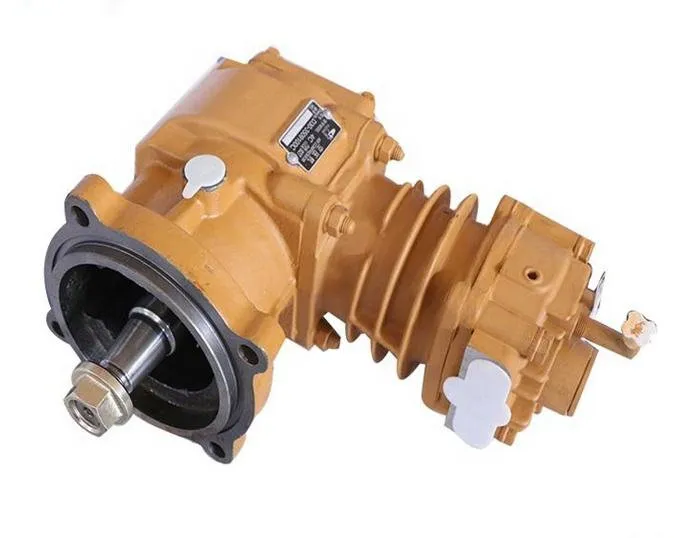
Key Product Details
- Part Numbers: 860109722 / D30-3509100
- Compatible Models: XCMG ZL50G wheel loader (widely deployed across construction, mining, and quarry operations) and XCMG LW500 series loaders, including LW500F, LW500K, and LW500KN variants.
- Function: Engine-driven compressor that supplies compressed air for the loader’s air-over-hydraulic braking system
- Category: Loader Parts → Braking System Components
For fleet managers who prefer to cross-reference before ordering, PartsByU provides a specifications sheet upon request. This is especially useful when replacing a compressor on an older machine where the original part number may have been superseded or is no longer visible.
👉 View and order the XCMG ZL50G / LW500 Air Compressor on PartsByU.com
When an Aging Compressor Demands Attention
Recognizing the signs of a failing air compressor can save fleet managers from expensive secondary damage — and more critically, from a sudden braking failure in the middle of a shift.
Three Warning Signs to Watch For
1. Slow Pressure Buildup
The most common early symptom: the air compressor takes noticeably longer to reach normal operating pressure. The root cause could be worn piston rings, leaking valves, or carbon buildup on the discharge side. Carbon deposits in the outlet hose are a known culprit — they restrict airflow and cause the compressor to labor harder than necessary. What starts as a few extra seconds of pressure buildup time at startup can cascade into a compressor that runs continuously, overheating and wearing itself out prematurely.
2. Excessive Noise During Operation
A properly functioning air compressor produces a steady, rhythmic sound. When that rhythm turns into knocking, rattling, or metallic grinding, something is mechanically wrong. Potential causes include worn bearings, loose mounting bolts, or internal component failure. Any of these, if left unchecked, can escalate to catastrophic compressor failure — and possibly damage the engine’s accessory drive in the process.
3. Braking Performance Decline
If the loader‘s brakes feel “spongy,” require more pedal effort than usual, or respond inconsistently, the air compressor may not be delivering sufficient pressure to the reservoir. This should be treated as an urgent safety issue. Note that brake performance issues can also stem from leaks elsewhere in the air system — in the air dryer, check valves, reservoir, or connecting lines — so a thorough diagnostic sequence is always recommended before attributing the fault solely to the compressor.
A Simple Diagnostic Sequence
Before replacing the compressor, run through these checks:
- Measure exhaust pressure. Low exhaust pressure points to the compressor as the source of the problem.
- Inspect the unloading valve and pressure regulating valve. A stuck unloading valve can mimic compressor failure.
- Check the one-way valves in the three-way joint. Corroded or stuck valves often cause the same symptoms as a bad compressor.
- If the compressor passes all three checks, the issue likely lies elsewhere in the air system — check for leaks, a clogged air dryer, or a faulty governor.
This sequence helps prevent the costly mistake of replacing a compressor that is still functional — a surprisingly common scenario in fleet maintenance.
OEM vs. Aftermarket: What Matters Most
When a critical component like an air compressor needs replacing, the default reaction for many fleet managers is to order from the OEM channel. On paper, that guarantees compatibility and quality. In practice, OEM pricing on safety components often carries a premium that is difficult to justify — particularly for older machines already well past their warranty period.
The alternative is a specialized aftermarket supplier — but not all suppliers are equal. The key is finding one that combines verified quality with real industry knowledge. The global construction equipment aftermarket was valued at approximately 28.53billionin2025∗∗andisprojectedtoreach∗∗28.53billionin2025∗∗andisprojectedtoreach∗∗30.44 billion in 2026, growing at a compound annual growth rate of 6.7% — driven in large part by fleet operators choosing cost-effective replacement parts to keep aging machines in service.
Three Questions to Ask Any Aftermarket Supplier
1. “Can you provide part number verification before shipping?”
A reputable supplier should be able to cross-reference your machine’s model, year, and existing part number against their inventory — and send photos or technical drawings for confirmation before the order leaves the warehouse.
2. “What quality testing does this part undergo?”
For air compressors specifically, ask whether each unit is tested for pressure output, leak integrity, and mounting tolerance before packaging. A “new aftermarket” part backed by testing documentation provides significantly more confidence than a part shipped straight from a warehouse shelf.
3. “What warranty and support do you offer?”
A supplier confident in its products will back them with a warranty and provide technical support for installation and troubleshooting questions. This is a strong signal that the supplier understands the equipment, not just the transaction.
China as a Sourcing Hub: A Note for B2B Buyers
China has become a dominant player in the global construction machinery aftermarket, from which a large and growing share of replacement parts originate. For international B2B buyers, sourcing directly from verified Chinese suppliers offers measurable cost advantages — but expertise and quality control vary widely. Buyers should prioritize suppliers with proven specialization in construction machinery, verifiable customer feedback, and transparent quality assurance practices.
Maintenance Practices That Extend Air Compressor Life
Once a new compressor is installed, a simple preventive maintenance routine can dramatically extend its service life.
- Check the air dryer regularly. A saturated or clogged air dryer forces the compressor to work harder and introduces moisture into the system, accelerating internal corrosion.
- Listen for changes. A compressor that suddenly sounds different — louder, harsher, or irregular — is communicating that something has changed internally. Investigate immediately rather than waiting for a full failure.
- Monitor system pressure during daily walkarounds. A slow, progressive drop in normal operating pressure over weeks or months is an early indicator of compressor wear that often goes unnoticed until it crosses a critical threshold.
- Check mounting bolts and drive connections. Vibration can loosen hardware over time, leading to misalignment and accelerated wear on both the compressor and the engine accessory drive.
- Inspect the compressor for oil leaks. Oil leaking from the compressor housing may indicate internal seal failure.
These practices take minutes per shift but can add hundreds of operating hours to a compressor’s lifespan — directly reducing per-hour maintenance costs.
About PartsByU
PartsByU is a specialized supplier of construction machinery parts, providing replacement components for XCMG, SDLG, LiuGong, Shantui, and other major brands. We serve fleet operators, equipment dealers, and independent service shops worldwide, focusing on verified quality, prompt shipping, and responsive customer service. Our product range spans engine components, hydraulic and braking system parts, electrical systems, and undercarriage components — supporting the full lifecycle of heavy machinery from routine maintenance to major repairs.
Whether you are replacing a single worn compressor or stocking parts for an entire fleet, our team is available to verify compatibility, provide detailed specifications, and answer technical questions before you place the order.
A final thought: The air compressor operates in the background of every shift — unseen, unheard, and unappreciated. But when it comes to stopping a 17-ton loader on a slope, in the rain, with a full bucket, nothing else on the machine matters more. For fleet managers who treat braking system maintenance as a safety priority rather than a cost line, choosing a reliable replacement compressor is one of the most consequential parts decisions they will make.
👉 Order the XCMG ZL50G / LW500 Air Compressor (860109722 / D30-3509100) at PartsByU.com — or contact our team directly for bulk pricing, compatibility verification, and shipping inquiries. We are here to keep your fleet running safely.